Paper vs Digital Wedding Invitations: Which Is Right for You?
An honest comparison of paper and digital wedding invitations — costs, timelines, response rates, and environmental impact to help you decide.

The Great Invitation Debate
Choosing between paper and digital wedding invitations is one of the first big decisions couples face when planning their wedding. Both options have genuine strengths, and the right choice depends on your priorities, budget, and guest list.
Let's break down the comparison honestly — no bias, just facts — so you can make the best decision for your wedding.
Cost Comparison
Paper Invitations
A paper invitation is paid per letter, and the card is only one line of the bill. For every invitation you send, add up:
- Design and printing of the invitation
- The envelope (and any liner, insert or seal)
- Postage, which depends on the size and weight of the letter
- An RSVP card, a return envelope and return postage, if guests reply by post
Prices vary a lot between printers, papers and countries, so the honest way to compare is with your own quotes. The wedding invitation cost calculator multiplies your prices by the number of letters you send and shows the result next to a digital invitation. Letterpress, foil stamping and custom illustration sit at the top of a printer's price list.
Digital Invitations
Digital services charge in different ways: per mailing, per guest, or as a subscription, and some have a basic plan at no cost with paid upgrades. Wedding Inviter is one payment per wedding: Premium $59 / €49 for up to 100 guests, or Luxe $139 / €119 for unlimited guests plus embedding your guest page on your own website. See both plans.
There are no printing, envelope, or postage costs. The total cost is predictable and transparent.
Timeline and Delivery
Paper
- Design approval: 1–2 weeks
- Printing: 2–4 weeks
- Assembly and addressing: 1–3 days
- Postal delivery: 3–7 days
- Total: 4–7 weeks from start to guest mailbox
Digital
- Design and setup: 15–30 minutes
- Delivery: Instant
- Total: Under 1 hour from start to guest inbox
This speed isn't just convenient — it's a lifesaver if your timeline is tight or details change last minute.
Response Rates and RSVP Management
This is where digital invitations genuinely shine. Guests answer a digital invitation with one tap on their phone, while a paper reply card has to be filled in, stamped and mailed back.
Why the difference? Digital RSVPs are frictionless. There's no stamp to buy, no card to mail, no "I'll do it later" that turns into never. Guests tap a button on their phone, and it's done.
Digital platforms also give you a real-time dashboard showing exactly who has responded, who hasn't, dietary requirements, and plus-one details — all automatically organized.
Design and Aesthetics
Paper Strengths
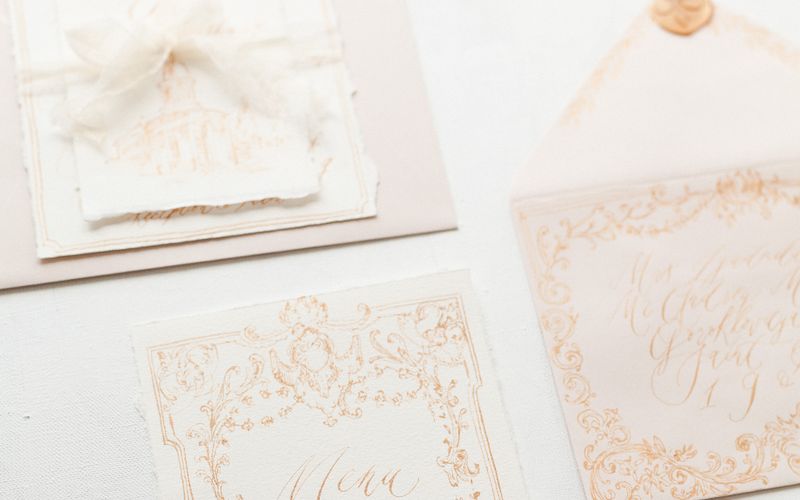
- Tactile experience: The weight of quality paper, the texture of letterpress, the feeling of receiving something physical — these create a memorable first impression.
- Keepsake value: Many guests save beautiful paper invitations as mementos.
- Perceived formality: For very formal or traditional weddings, paper still carries a certain gravitas.
Digital Strengths
- Interactive design: Animations, photo galleries, and interactive elements that paper simply can't offer.
- Always up to date: Change a venue, time, or detail, and every guest immediately sees the update.
- Rich content: Include maps, event schedules, accommodation suggestions, and more without cramming everything onto a card.
- Mobile-optimized: Designed to look beautiful on the device most guests will use.
Environmental Impact
For eco-conscious couples, this is often the deciding factor. A 100-guest paper invitation suite uses approximately:
- 4–6 kg of paper
- Printing chemicals and ink
- Transport fuel for postal delivery
- Packaging materials
Digital invitations eliminate all of these. It's a genuinely paperless option that doesn't require any compromise on quality or elegance.
Flexibility and Updates
This is perhaps the most underrated advantage of digital invitations. Weddings rarely go exactly as planned — venues change, times shift, COVID taught us that. With paper invitations, any change means reprinting, re-mailing, and hoping the update reaches everyone in time.
With digital, you update once, and every guest sees the change instantly. No confusion, no extra cost, no stress.
Who Should Choose Paper?
Paper invitations may be the better choice if:
- You're hosting a very formal, traditional wedding
- Your guest list includes many people who are uncomfortable with technology
- You want to include the invitation in a larger physical suite (save-the-dates, programs, etc.)
- Budget isn't a primary concern and you value the tactile experience

Who Should Choose Digital?
Digital invitations, also called electronic wedding invitations, are ideal if:
- You want fast, reliable RSVP tracking
- Your timeline is tight
- You're budget-conscious
- You care about environmental impact
- Your guest list is tech-comfortable (which is most people in 2026)
- You want the flexibility to update details after sending
The Hybrid Approach
Many couples are finding a middle ground: digital invitations for the majority of guests, with a handful of printed cards for grandparents or guests who prefer paper. This gives you the efficiency of digital with the personal touch of paper where it matters most.
Some couples also use digital invitations alongside printed save-the-dates, getting the best of both worlds without the full cost of a complete paper suite.
The Bottom Line
There's no universally "right" answer. Paper invitations offer a timeless, tactile experience. Digital invitations offer speed, efficiency, and modern elegance. The best choice is the one that fits your wedding, your guests, and your priorities.
What's clear is that digital invitations are no longer a compromise — they're a genuinely excellent option that more couples choose every year.
Related Resources
- Digital vs paper — detailed comparison table
- RSVP tracking — see why digital RSVPs outperform paper
- Browse all templates — elegant designs that rival paper
- Free digital invitations guide
Frequently asked questions
Are digital invitations cheaper than paper?
Usually, because there is no printing or postage per letter. Wedding Inviter costs $59 / €49 once for up to 100 guests or $139 / €119 for unlimited guests. Enter your printer's and post office's prices in the invitation cost calculator to see the difference for your own guest list.
Do guests prefer digital or paper invitations?
Many guests like digital for the convenience of instant RSVP. Paper invitations still have keepsake appeal, but digital makes it easy to answer and easy for you to track.
Can I use both paper and digital invitations?
Yes. A hybrid approach is popular: printed save-the-dates with a QR code linking to the full digital invitation and RSVP. This combines the tactile appeal of paper with digital convenience.
More from the Blog
 GuidesFree Digital Wedding Invitations: Your Options and Their Limits7 min read
 PlanningOnline Wedding RSVP: The Complete Guide to Digital Response Tracking8 min read
 Comparisons6 Best Paperless Post Alternatives for Wedding Invitations (2026)12 min read
 GuidesHow to Send Wedding Invitations Online: Step-by-Step Guide7 min read
 ComparisonsBest Online Wedding Invitation Sites in 2026: Honest Comparison10 min read
 PlanningWedding Invitations with RSVP Tracking: Why It Changes Everything6 min read
 PlanningWhen to Send Wedding Invitations: The Perfect Timeline for 20266 min read
 GuidesPaperless Wedding Invitations (2026): How to Go Paperless8 min read
 GuidesWedding Invitation Website Buyer’s Checklist: What to Compare9 min read
 PlanningWedding RSVP Website: Collect Replies Without Chasing Guests8 min read
 GuidesElectronic Wedding Invitations: Everything You Need to Know8 min read
 ComparisonsBest WithJoy Alternative for Wedding Invitations in 20269 min read
 GuidesDigital Save the Date: How to Announce Your Wedding Online7 min read
 ComparisonsWedding Invitation App vs No-App: Which Gets Better RSVPs?8 min read
 PlanningWedding RSVP Etiquette: How to Get Every Guest to Respond9 min read
 PlanningHow to Manage Your Wedding Guest List: From First Draft to Final Count10 min read
 InspirationWedding RSVP Wording Examples for Every Style and Situation12 min read
 InspirationSave the Date Wording: Examples for Every Style of Wedding9 min read
 InspirationWedding Website Wording: Templates for Every Section10 min read
 PlanningThe Ultimate Wedding Planning Checklist for 202614 min read
 PlanningWedding Invitation Checklist: What to Include & How to Send10 min read
 PlanningWedding Day Checklist: Hour-by-Hour Timeline & Vendor Guide11 min read
 GuidesDigital Wedding Invitations: The Complete Guide for 202611 min read
 InspirationWedding Invitation Wording: Examples for Every Situation10 min read
 ComparisonsZola vs Paperless Post: Which Is Better for Wedding Invitations?9 min read
 ComparisonsGreenvelope Alternatives for Wedding Invitations (2026)9 min read
 ComparisonsGreenvelope vs Joy for Wedding Invitations (2026)6 min read
 ComparisonsGreenvelope vs Paperless Post: Pricing & Wedding Invitations (2026)6 min read
 ComparisonsJoy vs Evite for Wedding Invitations (2026)6 min read
 GuidesWedding RSVP per Event: Ceremony, Reception and Evening Guests7 min read
 GuidesHow to RSVP to a Wedding: Online, In Person & What to Say7 min read
 GuidesWedding RSVP Deadline: When to Set It, and If Guests Miss It8 min read
 ComparisonsJoy vs Zola vs Paperless Post for Digital Wedding Invitations6 min read
 ComparisonsPaperless Post vs Evite for Wedding Invitations (2026)6 min read
 ComparisonsGreenvelope vs Evite for Wedding Invitations (2026)6 min read
 ComparisonsInviteDrop Alternatives for Wedding Invitations (2026)7 min read
 ComparisonseCardWidget vs Paperless Post: Which One Is for Weddings?5 min read
 GuidesWhat Does RSVP Mean on a Wedding Invitation?6 min read